Naturally dyed yarn · Stirling, Ontario
Colour from the woods behind the cabin.
Breed-specific Canadian wool, dyed by hand with plants we forage and grow — goldenrod, indigo, cochineal, walnut, white spruce — with rainwater, snow and sun.
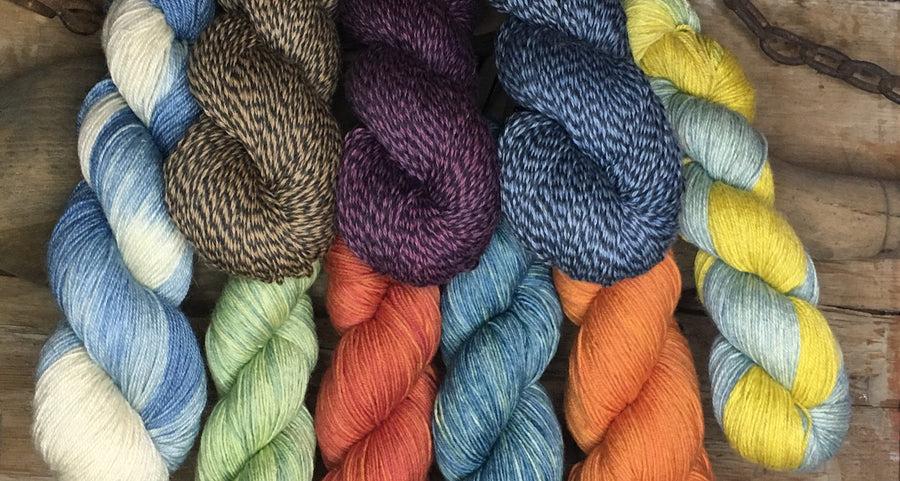
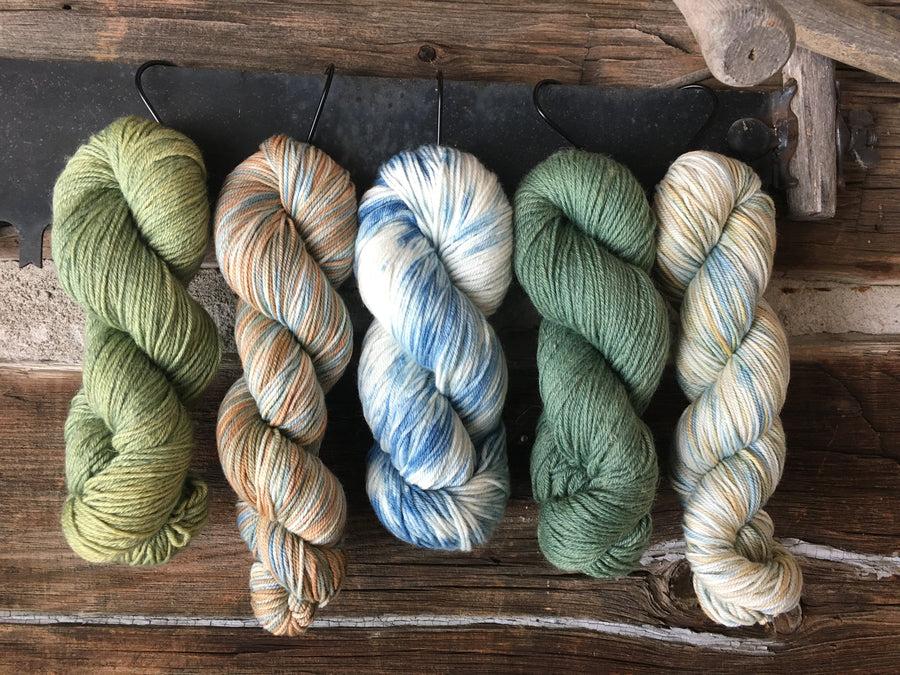
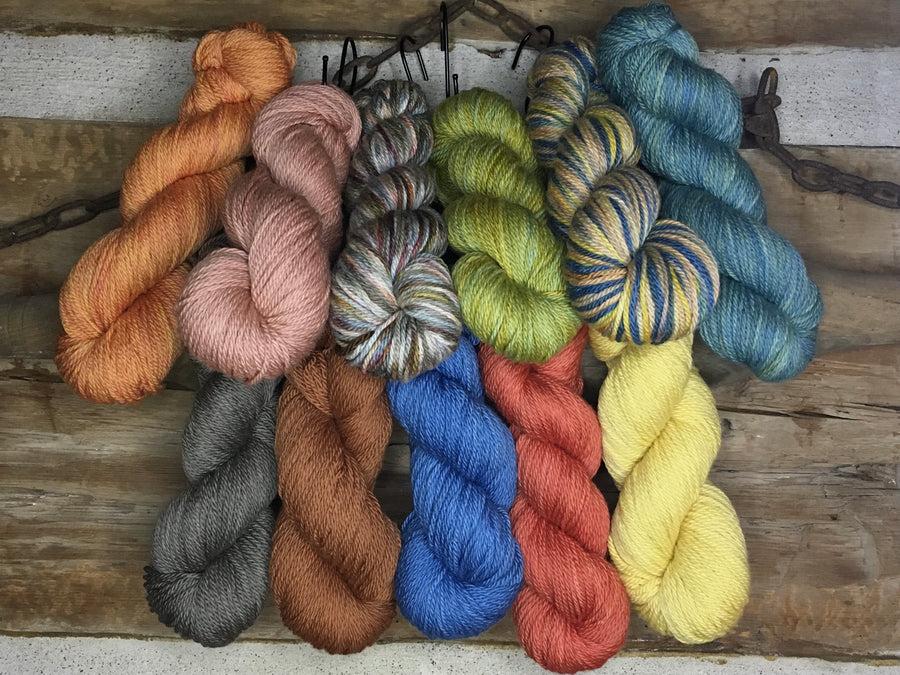
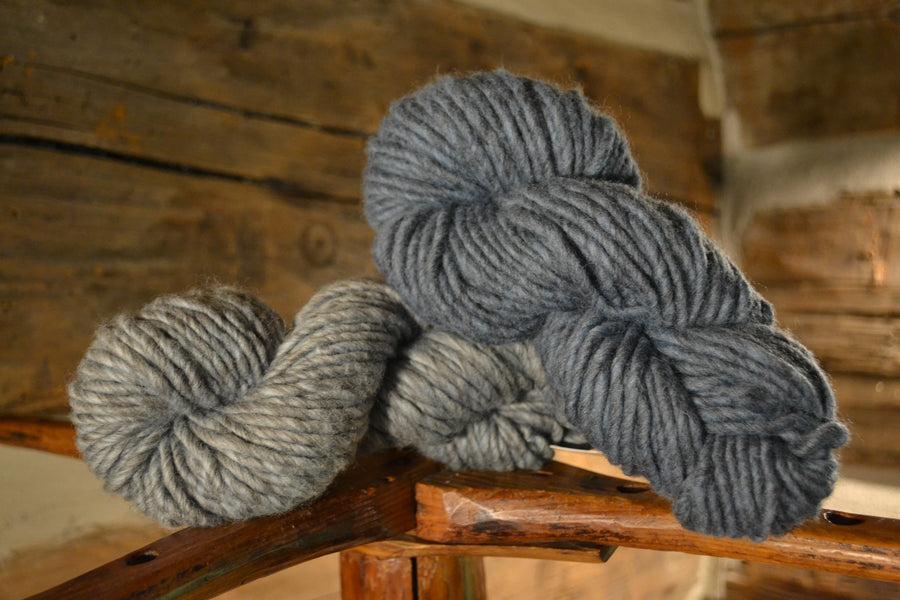
88 skeins in the current batchFingering · DK · Worsted · Bulky
Free shipping over $100 in Canada
From plant to skein
Every colour is a season, a plant and a pot.
No two batches match exactly. That's the point. Here's how a skein gets its colour.
- 01
Forage & grow
Goldenrod from the meadow, black-eyed Susan from the garden, white spruce and sumac from the woodlot, onion skins from the kitchen. Some dyes — indigo, cochineal, madder — come from further afield.
- 02
Scour & mordant
The wool is washed clean and fixed with a mordant so the colour bonds to the fibre and stays fast through years of wear and washing.
- 03
The dye bath
Rainwater or snowmelt when we can get it, simmered with the plant. Indigo is different: the skein comes out yellow-green and turns blue in the air, dip after dip.
- 04
Rinse, dry, twist
Rinsed until the water runs clear, dried in the sun and wind outside the cabin, then twisted and labelled by hand with the plant that coloured it.
From the current batch
Skeins on the shelf right now.
Prices in Canadian dollars. Free shipping over $100 in Canada.
The dye library
Seventeen plants, one insect, and everything they give.
What each dye yields on wool, where we get it, and the long history behind it — from the goldenrod out back to cochineal from a Mexican cactus.

The cabin
A naturally woven story, rooted in colourful tradition.
We set out to bridge the farmer, the spinner, the weaver, the knitter, the arty and the curious — and to make friends along the way. From a log cabin on Airport Road in Stirling, Ontario.
- Fibre sourced with careLocally and nationally first, from sheep-friendly farms and eco-friendly mills.
- Dye plants foraged & grownBackyard woods, gardens and farmers' markets; organic dye matter from afar when we must.
- Rainwater, snow and sunlightRecycled tools and materials wherever possible, with a limited footprint on the world.
Breed-specific wool
It matters which sheep.
Merino for softness. BFL for lustre and wear. Polwarth for how it drinks up colour. We label every skein with its breed, because the wool is half the story.
Learn with us
Watch the pots bubble on YouTube.
Wool, sheep breeds and natural dyeing — from the cabin, in our own words. New to plant dyes? Start there.
 Our YouTube channelWool · Sheep · Dye